
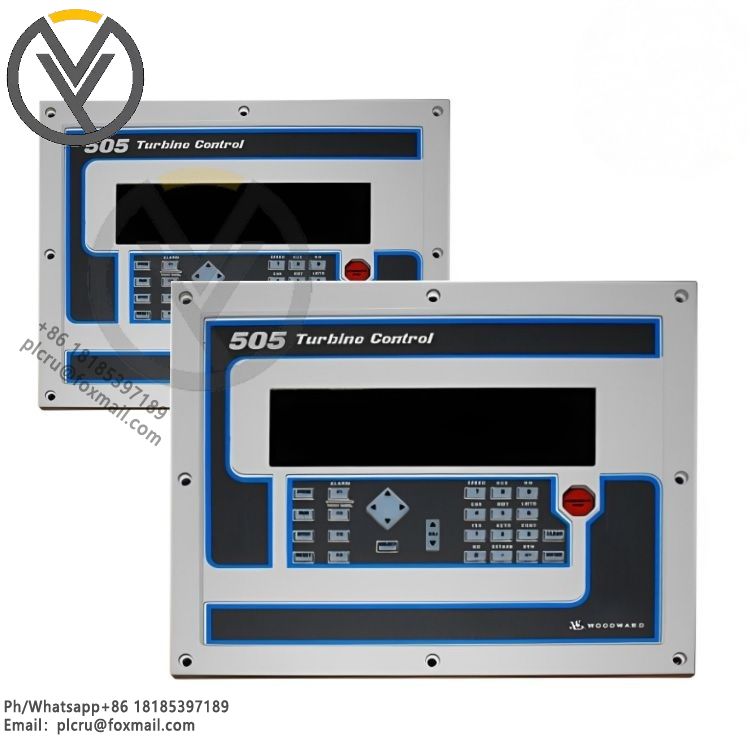
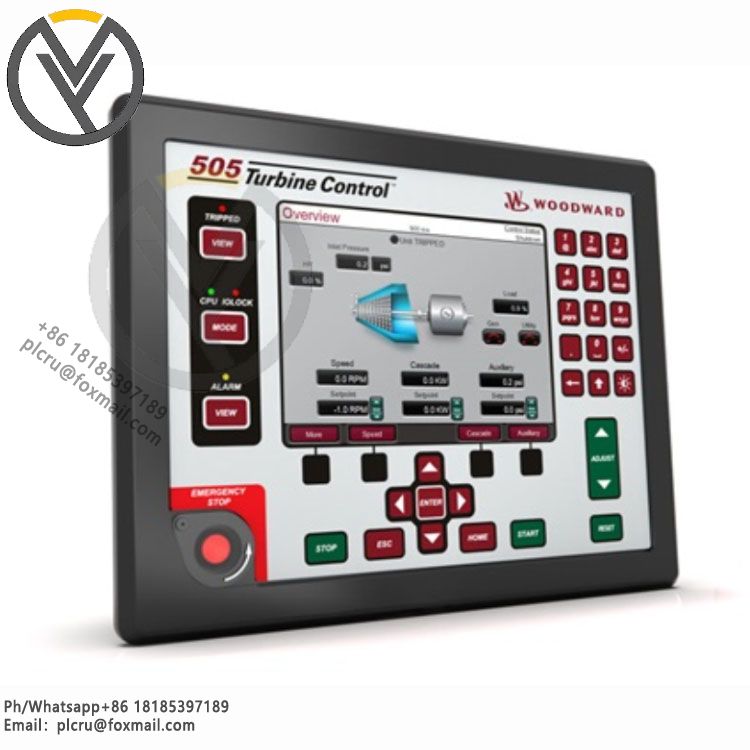
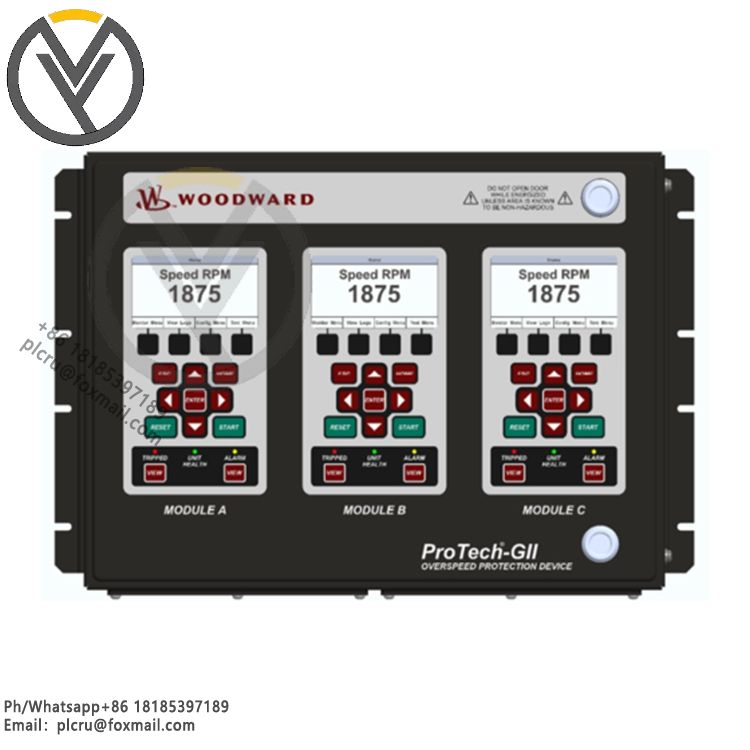
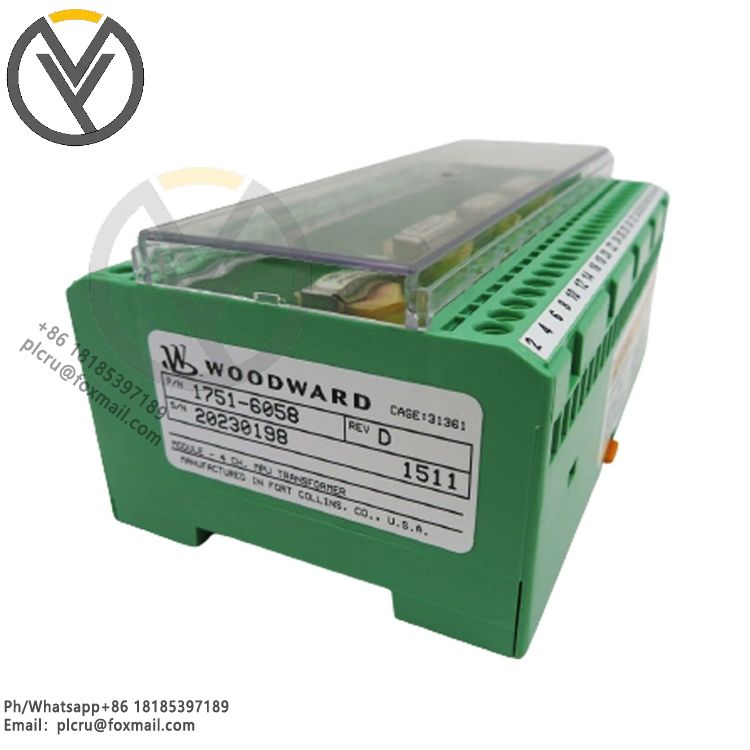
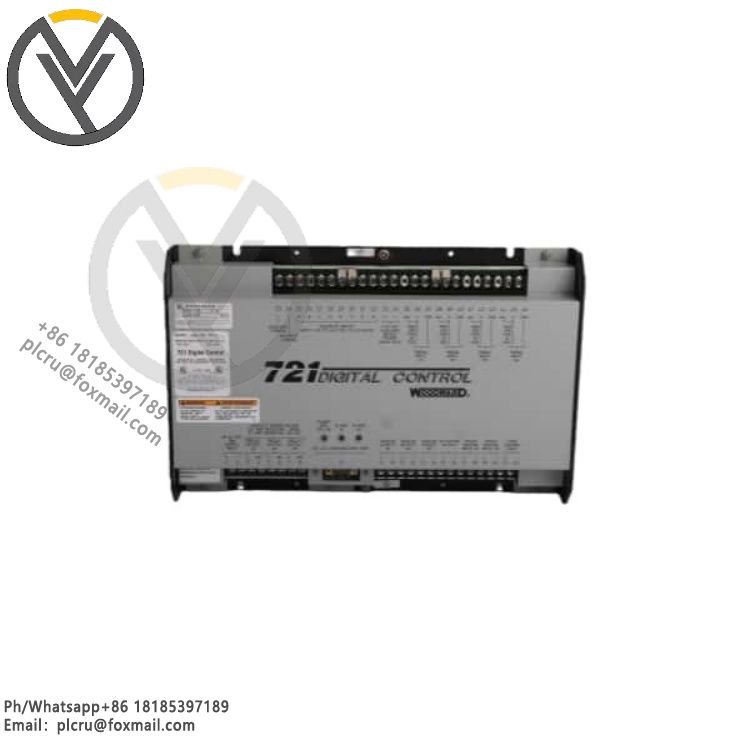
WOODWARD 8280-4001 Digital Control Module
Delivery time 3 days
Product origin New/used
Email plcru@foxmail.com
Mobile/wechat /WhatsApp +86 18185397189
The WOODWARD 8280-4001 is the core digital speed control module in the Woodward
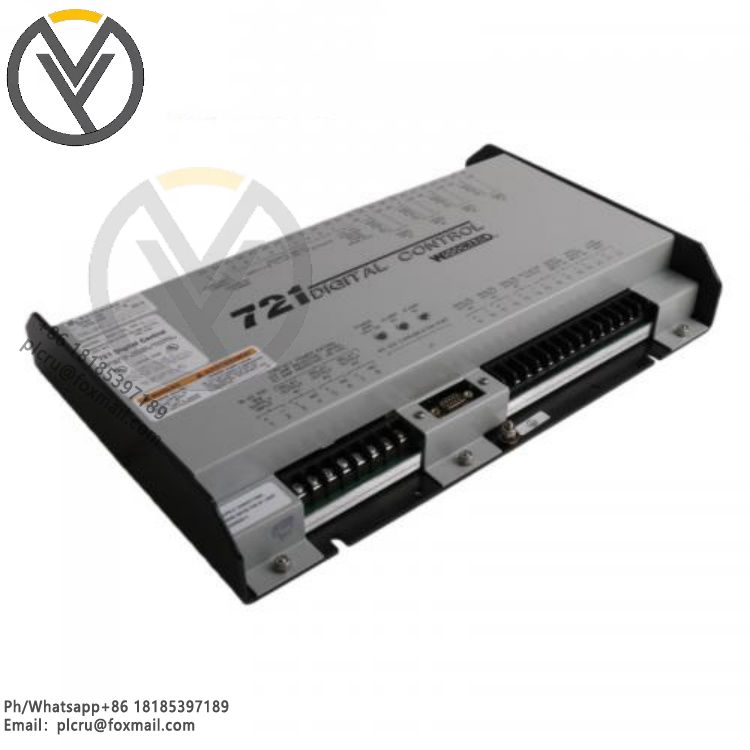
The WOODWARD 8280-4001 is the core digital speed control module in the Woodward 723PLUS series, designed specifically for industrial prime movers (diesel engines, natural gas engines, small gas turbines, etc.). It achieves precise closed-loop control of speed and load, adaptable to power generation, marine propulsion, and oil and gas compression scenarios, and supports standalone/parallel operation.
Core Positioning and Functions
System Role: The 723PLUS control core, responsible for speed regulation, actuator drive, safety protection, and system communication. It can operate independently or in parallel with a load distribution controller.
Core Capabilities
Constant speed control, load distribution, islanding/grid-connected switching, soft start/stop ramp control, steady-state speed control accuracy up to ±0.25% of rated speed.
Dual speed sensor inputs (MPU/proximity switch), supporting redundancy and torsional filtering to suppress the effects of flexible coupling vibration and prevent system instability.
Built-in overspeed protection, sensor fault diagnosis, and actuator feedback loss detection; triggers actuator action in case of abnormalities to ensure equipment safety.
Supports Modbus RTU/ASCII communication, enabling interface with HMI or host systems for remote monitoring and parameter tuning.
Key Hardware and Interfaces
Power Supply: Low-voltage type 18–40 VDC (24/32 V nominal); High-voltage type 90–150 VDC (125 V nominal), power consumption approximately 40 W, with a short-term surge upon power-up.
Signal Inputs: 2 speed inputs (MPU/proximity switch, 400–15000 Hz or 30–15000 Hz adaptation range); 8 discrete 24 VDC inputs; 3 analog 4–20 mA/0–10 V inputs; supports remote speed reference input of 4–20 mA/1–5 V.
Signal Output: 3 relay outputs (stop, alarm, status indication, dry contact); 3 analog outputs (#1/#2 configurable 4–20 mA/0–1 mA, #3 direct drive actuator 0–200 mA/4–20 mA).
Communication: 2 serial ports (RS-232/RS-422/RS-485), supporting Modbus; 1 service port, optional LON channel, compatible with LinkNet expansion modules.
Local Operation: Multi-line LED status display + operation buttons, supporting on-site parameter tuning and status viewing; accompanying PC software (Watch Window/Control View) allows for fine-tuning, data logging, and firmware upgrades.
Typical Application Scenarios: Generator set single/parallel operation (50/60 Hz grid), ensuring grid frequency stability.
Marine main propulsion/auxiliary engine systems, adapting to harsh marine environments.
Oil and gas transfer compressor and pump power control, handling rapid load changes.
Distributed energy and emergency backup power systems enable rapid start-up, shutdown, and switching.
Safety and Protection Mechanisms
Overspeed Protection: Built-in high-speed detection triggers actuator fuel limiting to prevent engine overspeed damage.
Sensor Fault: Single-channel speed sensor faults only trigger an alarm; dual-channel faults can be configured to shut down the system; analog input abnormalities (exceeding the 2–22 mA range) trigger an alarm/shutdown.
Actuator Protection: Includes start-up fuel limit, maximum fuel limit, and torsional level over-limit protection to prevent overload and system oscillation.
Alarm Reset: Can be reset via local buttons, handheld programmer, Modbus commands, or discrete inputs. Before resetting, ensure the fault has been cleared.
Differences from Other Modules in the Series
The 8280-4001 focuses on speed control and is the 723PLUS basic control unit.
The 8280-412 in the same series is a DSLC load distribution controller used for even load distribution when multiple units are operating in parallel; it must be used in conjunction with the 8280-4001.
Installation and Usage Guidelines
Installation: Metal casing, protection level suitable for industrial environments. Avoid direct sunlight and rain. Reliable grounding is required.
Wiring: Use shielded twisted-pair cable for sensors and signal cables. Wiring should be done according to the manual specifications to minimize interference.
Parameter Adjustment: Adjust PID gain, acceleration/deceleration time, and torsional filter parameters according to engine type and application scenario. Fine-tuning via PC software is recommended.
Related products