
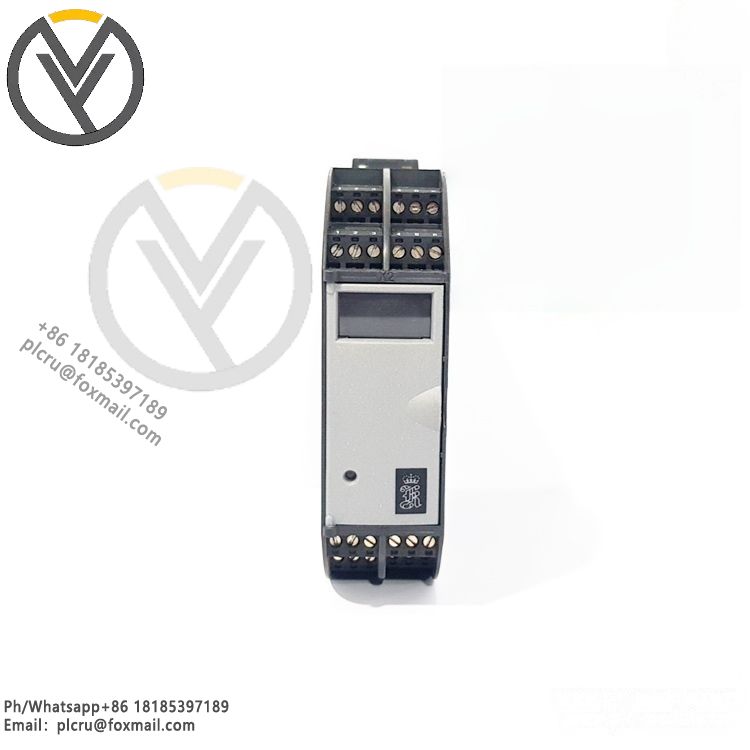
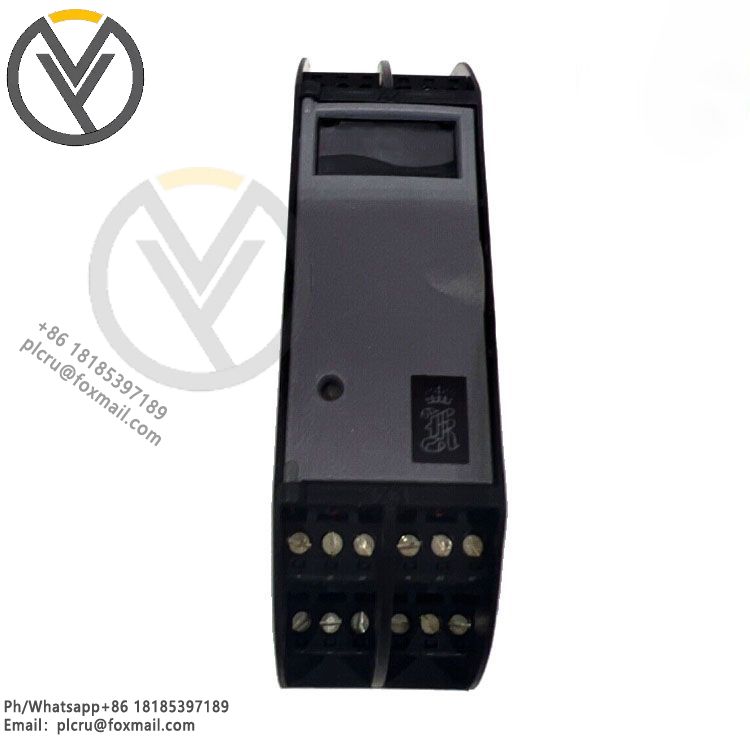
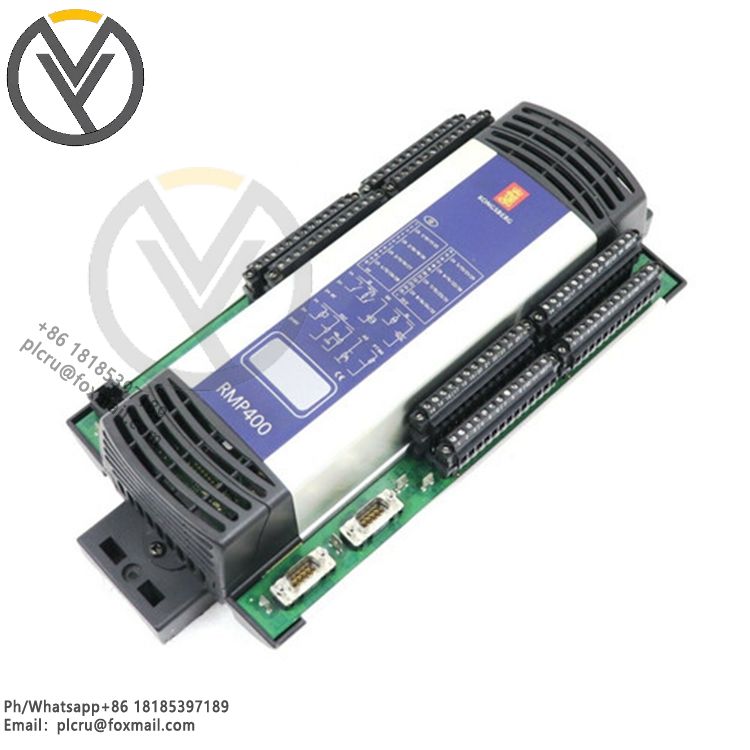
KONGSBERG RAIT400 Remote Controller Unit
Delivery time 3 days
Product origin New/used
Email plcru@foxmail.com
Mobile/wechat /WhatsApp +86 18185397189
The KONGSBERG RAIT400 Remote Controller Unit (part number 601771, common version
The KONGSBERG RAIT400 Remote Controller Unit (part number 601771, common versions REV.B1/C1) is a remote control unit from Kongsberg Maritime. It is a core component of Kongsberg's Marine Automation 400 series, specifically designed for distributed remote control and signal processing of marine power, propulsion, and auxiliary systems. It is suitable for merchant ships, offshore vessels, engineering vessels, and other maritime applications.
Core Positioning and Functions: The RAIT400 is positioned as a distributed remote control node, responsible for field signal acquisition, control logic execution, command forwarding, and status feedback. It serves as a crucial hub connecting the upper-level main controller (such as the RCU500) with field execution/sensing devices.
Signal Processing: Integrates analog/digital signal input/output capabilities, adapting to control and status monitoring signals from propellers, main engines, auxiliary engines, pumps, valves, and other equipment.
Control Execution: Supports local control logic operations, interlocking protection, start/stop control, and mode switching, reducing the computational load on the main controller.
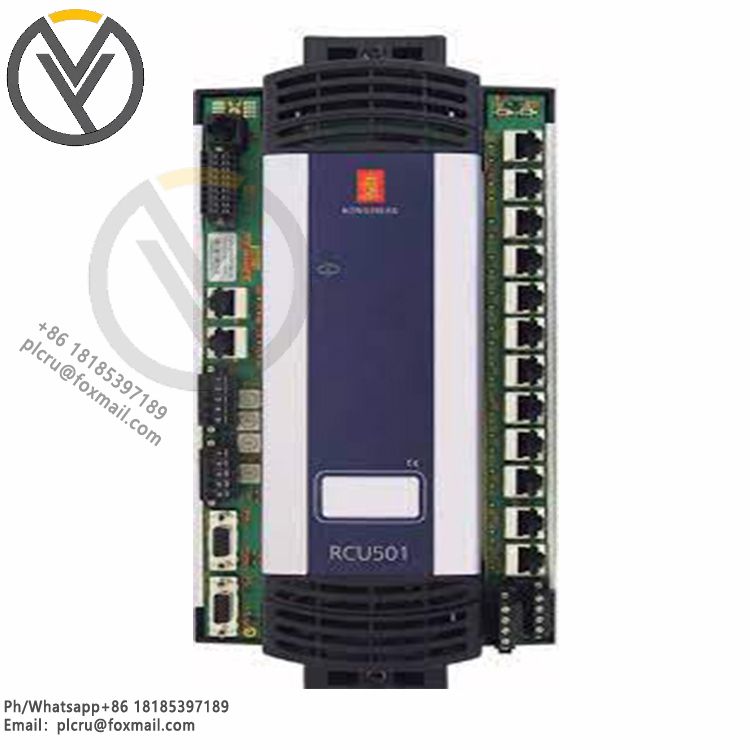
Communication Hub: Networked with upper-level RCU500, RPC400 panels and RIO400 series I/O modules via a Kongsberg dedicated SPBus bus, enabling bidirectional data exchange and system redundancy.
Diagnostics and Monitoring: Built-in self-test (BIST), status indication, and fault alarm functions support real-time system diagnosis and maintenance.
Hardware and Interface Characteristics:
Power Supply: Adapts to marine 24VDC wide-voltage input, meeting marine equipment power supply standards, and features overvoltage, undervoltage, and short-circuit protection.
Processor: Employs an industrial-grade embedded processor, ensuring real-time control and data processing capabilities, and supporting multi-task parallel operation.
Communication Interface: Standard dual SPBus interfaces (with redundancy), compatible with industrial buses such as CAN and Ethernet, and seamlessly connects to Kongsberg K-Chief, K-Pos, and other automation platforms.
I/O Configuration: Integrated isolated analog input/output and digital input/output channels, supporting Namur, PNP/NPN, and other signal types, adaptable to various marine sensors and actuators. Reliability: Adopts vibration-resistant and electromagnetic interference (EMC) resistant design, complies with marine regulations of classification societies (DNV, ABS, etc.), supports redundant configuration and hot-swappable replacement, ensuring continuous operation.
Physical Structure and Installation: Compact structure, supports DIN rail mounting, equipped with LED status indicators at the front end for easy on-site status monitoring and troubleshooting.
System Collaboration and Application Scenarios
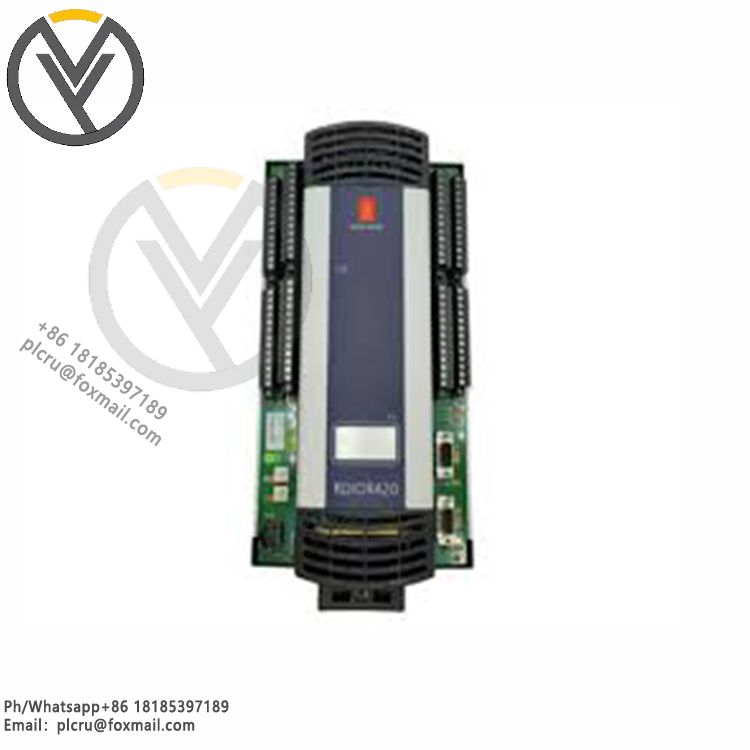
Collaborative Devices: Forms a redundant control architecture with the RCU500 main controller, achieves human-machine interaction with the RPC400 remote panel, and forms a complete distributed control system through RIO400/RAIC400/RDIO400 extended I/O interfaces.
Typical Applications: Remote monitoring and control of marine main engines/auxiliary engines, propeller (main propeller/side thruster) command issuance and status feedback, distributed control of auxiliary equipment such as ballast systems and pump/valve assemblies, and low-level control nodes for power management systems (PMS) and dynamic positioning (DP) systems.
Compliance and Advantages
Complies with maritime standards such as IEC 60945 and IACS E10, is certified by major classification societies, and is suitable for harsh marine environments.
Modular design supports flexible expansion and rapid maintenance, reducing the deployment and operation costs of ship automation systems.
High real-time performance and reliability ensure the stable operation of critical ship control systems, improving navigation safety and operational efficiency.